

Collaborative Cyber Threat Intelligence: Building a Community-Driven Defense Ecosystem
- Shilpi Mondal

- May 28, 2025
- 3 min read
SHILPI MONDAL| DATE: MARCH 13,2025

In today's interconnected digital landscape, cyber threats have become increasingly sophisticated and pervasive, posing significant risks to organizations worldwide. To combat these evolving challenges, collaborative cyber threat intelligence (CTI) has emerged as a pivotal strategy, fostering a community-driven defense ecosystem. This approach emphasizes the collective sharing of threat information, enabling organizations to bolster their security postures proactively.
Benefits of Sharing Threat Intelligence

Sharing threat intelligence offers numerous advantages that enhance an organization's ability to defend against cyber threats:
Enhanced Detection and Response: By exchanging threat data, organizations can swiftly identify and respond to emerging threats, leveraging collective insights to mitigate potential impacts.
Resource Optimization: Collaborative intelligence allows organizations to pool resources, reducing redundancy in threat analysis and enabling more efficient allocation of security efforts.
Improved Threat Awareness: Access to shared intelligence broadens an organization's understanding of the threat landscape, facilitating the anticipation of potential attacks and the implementation of preemptive measures.
Strengthened Community Defense: A unified approach to threat intelligence fosters a collective defense mechanism, where the security of one organization contributes to the resilience of the entire community.
Platforms Enabling Collaboration
Several platforms have been instrumental in facilitating the sharing of threat intelligence:
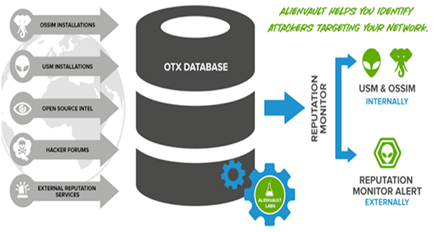
Open Threat Exchange (OTX): Developed by AT&T Cybersecurity, OTX is a crowd-sourced platform with over 180,000 participants across 140 countries. It enables users to share, discuss, and research security threats, providing real-time threat feeds and collaborative analysis.
MISP Threat Sharing: An open-source threat intelligence platform, MISP allows organizations to share indicators of compromise and threat data efficiently. It supports the integration of various data sources and facilitates automated threat data exchange.
Five Eyes Alliance: Comprising the United States, United Kingdom, Canada, Australia, and New Zealand, this intelligence-sharing alliance exemplifies governmental collaboration in threat intelligence, enhancing national and international security measures.
Impact on Proactive Defense

The collaborative sharing of threat intelligence significantly bolsters proactive defense strategies:
Early Threat Identification: Shared intelligence enables organizations to detect potential threats before they materialize, allowing for timely implementation of defensive measures.
Adaptive Security Measures: Continuous intelligence sharing ensures that defense mechanisms evolve in line with emerging threats, maintaining their effectiveness over time.
Incident Response Preparedness: Access to a broad spectrum of threat data equips organizations with the knowledge to develop robust incident response plans, minimizing the impact of security breaches.
Challenges and Considerations
While the benefits of collaborative CTI are substantial, organizations must navigate certain challenges:
Data Privacy and Security: Ensuring that shared intelligence does not compromise sensitive information requires stringent data handling and anonymization protocols.
Trust Among Participants: Building and maintaining trust is crucial for effective collaboration, necessitating clear guidelines and mutual agreements among participating entities.
Standardization of Data Formats: Harmonizing the formats and structures of shared data is essential to facilitate seamless integration and analysis across different platforms.
Conclusion
Embracing collaborative cyber threat intelligence is imperative for organizations aiming to enhance their cybersecurity resilience. By participating in community-driven defense ecosystems and leveraging platforms designed for threat intelligence sharing, organizations can proactively address emerging threats, optimize resources, and contribute to a safer digital environment for all.
Citations:
Nash, A. (2025, February 12). Building a collective defense: collaborative threat intelligence and information sharing for critical infrastructure. Mattermost.com. https://mattermost.com/blog/building-a-collective-defense-collaborative-threat-intelligence/
Toward a collaborative cyber defense and enhanced threat intelligence structure. (2024, October 23). The Belfer Center for Science and International Affairs. https://www.belfercenter.org/publication/toward-collaborative-cyber-defense-and-enhanced-threat-intelligence-structure
Hester, D. E. (2023, June 28). The power of collaboration in cyber Defense: Building a resilient community. learnsecurity-org. https://www.learnsecurity.org/single-post/the-power-of-collaboration-in-cyber-defense-building-a-resilient-community
Axios Future of Cybersecurity. (n.d.). Axios. https://www.axios.com/newsletters/axios-future-of-cybersecurity-f9cf8cf0-fab8-11ef-b65f-110efff1a746
Image Citations:
Nash, A. (2025, February 12). Building a collective defense: collaborative threat intelligence and information sharing for critical infrastructure. Mattermost.com. https://mattermost.com/blog/building-a-collective-defense-collaborative-threat-intelligence/
The Hacker News. (n.d.). Crowd-Sourced threat intelligence: AlienVault Open Threat ExchangeTM (OTX). https://thehackernews.com/2014/07/crowd-sourced-threat-intelligence.html


Comments