

Next-Gen SOCs: How AI and Predictive Analytics are Transforming Threat Monitoring
- Shiksha ROY

- May 29, 2025
- 5 min read
SHIKSHA ROY | DATE: JANUARY 28, 2025

In today's digital age, the landscape of cybersecurity is constantly evolving, with new threats emerging at an unprecedented pace. Traditional Security Operations Centers (SOCs) are finding it increasingly challenging to keep up with the sophistication and volume of cyberattacks. Enter the Next-Generation SOCs (Next-Gen SOCs), which leverage cutting-edge technologies like Artificial Intelligence (AI) and Predictive Analytics to transform threat monitoring and response. These advanced SOCs are not just reactive but proactive, capable of anticipating and mitigating threats before they can cause significant harm. This article delves into how AI and Predictive Analytics are revolutionizing SOCs, enhancing their ability to protect organizations from the ever-growing array of cyber threats.
The Evolution of SOCs
Conventional Security Operations Centers (SOCs) have traditionally concentrated on detecting and addressing security incidents within an organization's network. However, the growing complexity and sophistication of cyber threats necessitate a more proactive and cohesive strategy. Next-Generation SOCs are crafted to be more adaptive, scalable, and intelligent, utilizing advanced technologies to outpace adversaries.
Key Trends Shaping Next-Gen SOCs
Artificial Intelligence and Machine Learning
Artificial Intelligence (AI) and Machine Learning (ML) are leading the charge in the transformation of Next-Generation Security Operations Centers (SOCs). These technologies facilitate the automation of threat detection, analysis, and response, drastically cutting down the time required to identify and address security incidents. AI-powered analytics can process enormous volumes of data, revealing patterns and anomalies that might escape human detection.
Threat Intelligence Integration
Next-Generation SOCs are progressively dependent on real-time threat intelligence feeds to remain informed about the newest threats and vulnerabilities. By incorporating threat intelligence into their workflows, SOCs can proactively detect and address emerging threats, thereby boosting their overall efficiency and effectiveness.
Automation and Orchestration
Automation is a vital element of Next-Generation SOCs. By automating routine tasks and incident response procedures, SOCs can allow human analysts to concentrate on more complex and strategic activities. Security Orchestration, Automation, and Response (SOAR) platforms are essential in optimizing operations and enhancing efficiency.
Cloud Security
As organizations increasingly move to the cloud, Next-Generation SOCs must evolve to secure cloud environments. This entails overseeing cloud infrastructure, applications, and data to identify potential threats. Utilizing cloud-native security tools and practices is crucial for ensuring strong security in a cloud-centric world.
Zero Trust Architecture
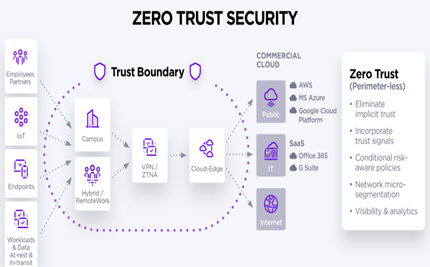
The Zero Trust model, which operates on the premise that threats can originate both inside and outside the network, is fundamental to Next-Generation SOCs. Implementing Zero Trust principles requires ongoing verification of user identities, stringent access controls, and micro-segmentation to minimize the potential impact of any breaches.
Extended Detection and Response (XDR)
XDR solutions offer a comprehensive perspective on an organization's security posture by consolidating data from multiple sources, such as endpoints, networks, and cloud environments. This comprehensive approach enhances threat detection and response capabilities.
The Role of AI in Threat Monitoring
AI has become a crucial tool in contemporary threat detection. By utilizing machine learning and advanced AI algorithms, organizations can automate essential processes for identifying, analyzing, and preemptively mitigating cybersecurity threats. These sophisticated algorithms analyze vast data sets, facilitating early threat detection and enabling security teams to uncover hidden risks.
AI Capabilities in Threat Detection
Automated Threat Detection: AI systems can automatically detect and respond to threats in real-time, reducing the reliance on manual intervention.
Pattern Recognition: AI-driven analytics can identify patterns and anomalies in data that might indicate a security threat.
Predictive Analytics: AI can predict potential threats based on historical data and trends, allowing organizations to take proactive measures.
Predictive Analytics in Threat Monitoring
Predictive analytics has emerged as a formidable tool in cybersecurity, allowing organizations to foresee and address cyber threats before they inflict damage. By harnessing data, machine learning, and statistical algorithms, predictive analytics detects patterns and predicts potential security incidents, offering a proactive method for threat management.

Key Applications of Predictive Analytics
Threat Detection and Anomaly Detection: Predictive analytics can identify unusual behavior patterns, aiding in the detection of malicious activities or potential insider threats.
Risk Assessment and Vulnerability Management: By examining system vulnerabilities and the frequency of past incidents, predictive models help prioritize security patches and allocate resources to high-risk areas.
Fraud Prevention: Predictive analytics helps identify fraudulent activities by analyzing patterns in financial transactions, thereby reducing financial loss and safeguarding sensitive information.
Incident Response Optimization: Predictive models can anticipate response needs, allowing for better preparation for future incidents and more efficient resource allocation for quicker recovery.
Challenges and Future Directions

While AI and predictive analytics offer substantial advantages, they also present challenges. Data quality and quantity, the need for high-quality data, and the complexity of integrating these technologies into existing systems are significant hurdles. However, advancements in AI and predictive models hold the potential to further strengthen cybersecurity defences, making Next-Gen SOCs more effective and resilient against evolving threats.
Future Trends in SOC Evolution
As AI and predictive analytics continue to mature, the future of Next-Gen SOCs looks promising. Anticipated trends include:
Hyper-Automation: The integration of AI with robotic process automation (RPA) for end-to-end automation.
Adaptive AI: Systems that learn and evolve autonomously in response to new threats.
Collaborative Defense: Enhanced sharing of threat intelligence among organizations to combat cybercrime collectively.
Quantum-Resilient SOCs: Preparing for the cybersecurity challenges posed by quantum computing.
Conclusion
The integration of Artificial Intelligence (AI) and Predictive Analytics into Security Operations Centers (SOCs) marks a significant leap forward in the field of cybersecurity. Next-Generation SOCs are transforming threat monitoring from a reactive to a proactive discipline, enabling organizations to anticipate and neutralize threats before they can inflict damage. By harnessing the power of AI, SOCs can automate complex processes, detect patterns and anomalies with unprecedented accuracy, and respond to incidents in real-time. Predictive Analytics further enhances these capabilities by forecasting potential threats and guiding strategic decision-making. As cyber threats continue to evolve, the adoption of these advanced technologies will be crucial in building resilient and adaptive security infrastructures, ensuring that organizations remain one step ahead of adversaries. The future of threat monitoring is here, and it is intelligent, predictive, and remarkably effective.
Citations
BBC News. (2017, April 19). Why an American went to Cuba for cancer care. https://www.bbc.com/news/magazine-39640165
Bielderman, W. (2025, January 2). Gedragsregulering | Het BreinPannetjes model. Trainingen Gedrag, Pedagogisch Klimaat & Welbevinden in De Klas. https://www.ontwikkeltaal.nl/gedragsregulering-het-breinpannetjes-model/
World Health Organization: WHO. (2022, June 8). Trastornos mentales. https://www.who.int/es/news-room/fact-sheets/detail/mental-disorders
Smith, T., & Williams, B. M. (2020). The citation manual for students: A quick guide (2nd ed.). Wiley. https://doi.org/10.1000/182
Image Citations
Bodor, A., Bounedjoum, N., Vincze, G. E., Kis, Á. E., Laczi, K., Bende, G., Szilágyi, Á., Kovács, T., Perei, K., & Rákhely, G. (2020). Challenges of unculturable bacteria: environmental perspectives. Reviews in Environmental Science and Bio/Technology, 19(1), 1–22. https://doi.org/10.1007/s11157-020-09522-4
Ryabokony, E., Krecan, Z., & Shmakova, L. (2020). Visualization of educational information as a means of enhancing the cognitive activity in students. Bulletin of Kemerovo State University Series Humanities and Social Sciences, 2020(2), 126–136. https://doi.org/10.21603/2542-1840-2020-4-2-126-136
Área de figuras planas: como calcular, exemplos. (n.d.). [Video]. Brasil Escola. https://brasilescola.uol.com.br/matematica/area-de-figuras-planas.htm


Comments