

The Future of AI-Powered Sleep Technology: Smart Beds & Sleep Optimization
- Swarnali Ghosh

- May 27, 2025
- 7 min read
SWARNALI GHOSH | DATE: MAY 26, 2025
Introduction: The AI Sleep Revolution

Picture a bed that intuitively understands how you sleep, adapts its support as you rest, and gently adjusts your position to prevent snoring—before it disturbs anyone else. This isn’t science fiction—it’s the reality of AI-powered sleep technology. As sleep science advances, smart beds and AI-driven sleep optimization tools are transforming how we rest, recover, and wake up refreshed. With nearly 40% of adults worldwide suffering from sleep disorders and millions struggling with poor sleep quality, the demand for intelligent sleep solutions has skyrocketed 2. From self-adjusting mattresses to AI sleep coaches, the future of sleep is here—and it’s smarter than ever. In this deep dive, we’ll explore how AI is revolutionizing sleep technology, the latest innovations in smart beds, and what the future holds for optimizing our nightly rest. As technology continues to shape every part of our daily routines, it's only natural that sleep becomes the next area ripe for transformation. Artificial Intelligence (AI) is revolutionizing sleep technology, transforming traditional beds into intelligent systems that monitor, analyze, and enhance our rest. This article delves into the advancements in AI-powered sleep technology, exploring how smart beds are optimizing sleep and what the future holds for this burgeoning field.
The Emergence of Smart Beds
Smart beds are not just a luxury; they represent a significant leap in sleep science. Combining artificial intelligence, smart sensors, and IoT capabilities, these beds are designed to deliver a customized and responsive sleep experience. They monitor various parameters such as heart rate, breathing patterns, and movement to adjust the bed's settings in real-time, ensuring optimal comfort and support throughout the night. While conventional mattresses provide fixed support, AI-driven smart beds actively respond to your body using sensors, adaptive algorithms, and real-time modifications to improve the way you sleep. These beds track: Heart rate & breathing patterns, Body temperature & movement, Sleep stages (light, deep, REM), Snoring & sleep disruptions. Unlike basic sleep trackers, smart beds actively respond to these metrics. For example, if you start snoring, the bed gently elevates your head to open your airways. If your body temperature rises, cooling mechanisms activate. If you toss and turn, the mattress adjusts firmness to relieve pressure points.
Key Features of AI-Powered Smart Beds
Advanced Sleep Tracking: Modern smart beds are equipped with sensors that collect data on sleep stages, heart rate variability (HRV), respiratory rate, and movement. This data is analysed by AI algorithms to provide insights into sleep quality and patterns. For instance, the Eight Sleep Pod 4 Ultra tracks these metrics and offers personalized recommendations to improve sleep hygiene.
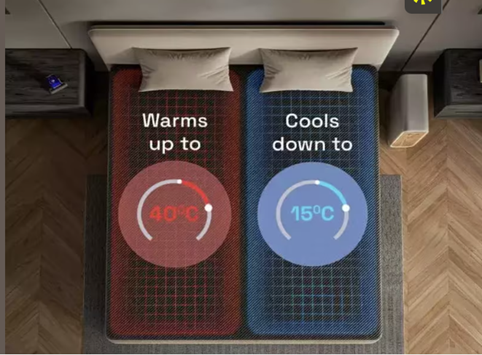
Temperature Regulation: Keeping your body at the right temperature during the night plays a key role in achieving deep, restorative sleep. Smart beds like the Eight Sleep Pod 4 Ultra feature dual-zone temperature control, allowing each side of the bed to be heated or cooled independently. This ensures that both partners can enjoy their preferred sleep temperature.

Snore Detection and Intervention: Snoring can disrupt sleep quality for both the snorer and their partner. AI-powered beds can detect snoring and automatically adjust the bed's position to alleviate it. The Tempura Ergo Smart Base, for example, elevates the upper body when snoring is detected, helping to open airways and reduce snoring.
Smart Alarms and Wake-Up Features: Waking up during the lightest sleep phase can make mornings more pleasant. Smart beds use AI to determine the optimal wake-up time within a set window, gently waking users with vibrations or gradual lighting changes. This approach minimizes grogginess and enhances alertness upon waking.
Integration with Smart Home Systems: Smart beds can be integrated into broader smart home ecosystems. They can communicate with other devices like thermostats, lights, and voice assistants to create a cohesive sleep environment. For instance, a smart bed can communicate with your thermostat to fine-tune the room’s climate or prompt your lighting system to gradually dim as you get closer to bedtime.
Leading Innovations in the Market
Eight Sleep Pod 4 Ultra: Eight Sleep's Pod 4 Ultra is a standout in the smart bed market. It comes equipped with cutting-edge capabilities such as personalized temperature settings for each side of the bed, in-depth sleep monitoring, and intelligent, AI-based responsiveness. The bed's sensors monitor various sleep metrics, and the accompanying app provides personalized recommendations. However, these features come at a premium, with the bed priced at $4,700, excluding a $199 annual subscription.
Tempura Ergo Smart Base: The Tempura Ergo Smart Base combines comfort with technology. It features snore detection, automatic head elevation, and compatibility with voice assistants like Alexa. The bed also includes a smart alarm and offers a luxurious memory foam mattress. While the complete setup costs around £10,197, it provides a comprehensive sleep solution.
Sleep Number C2 Smart Bed: Sleep Number's c2 Smart Bed offers adjustable firmness and sleep tracking at a more accessible price point. It uses the SleepIQ app to provide insights into sleep quality and allows users to adjust the bed's firmness to their preference. This bed is particularly beneficial for couples with differing comfort needs.
How AI Optimizes Sleep in Real-Time
Personalized Temperature Control: One of the biggest disruptors in sleep tech is AI-driven climate regulation. Studies show that the ideal sleep temperature is between 60-67°F (15-19°C), yet most people struggle with overheating or feeling too cold. Innovative sleep systems such as the Eight Sleep Pod 3 and the Sleep Number 360 incorporate the following technologies:
Hydrocooling or thermoelectric layers: to regulate bed temperature.
Machine learning: to predict when you overheat and adjust pre-emptively.
Snoring Detection & Correction: Snoring affects nearly 45% of adults and can disrupt sleep quality for partners. AI-powered beds now feature:
Microphone sensors: that detect snoring vibrations.
Automatic head elevation: to improve airflow.
Vibration alerts: to gently shift sleepers onto their side.
Sleep Stage Optimization: AI doesn’t just track sleep—it enhances it. By analysing:
Heart rate variability (HRV): Measures the variation in time between heartbeats, indicating stress levels and recovery quality.
Breathing patterns: Tracks inhalation/exhalation rates to detect sleep apnea or irregular breathing during sleep.
Movement frequency: Monitors tossing/turning to assess restlessness and sleep disruptions.
Wake you during light sleep: Uses smart alarms to rouse you at the optimal sleep stage, reducing grogginess.
Adjust firmness during deep sleep: Automatically modifies mattress support to minimize disturbances in restorative sleep phases.
Provide sleep coaching tips: Delivers AI-generated insights (e.g., ideal bedtime, lifestyle changes) via apps to improve long-term sleep habits.
The Future: Where AI Sleep Tech is Headed
Early Disease Detection: AI beds may soon predict: Sleep apnea (via breathing irregularities). Neurological disorders (like Alzheimer’s, through sleep pattern shifts). Metabolic issues (linked to poor sleep).

Neurostimulation for Deep Sleep: Emerging tech like Modius Sleep uses EEG headbands to stimulate sleep-inducing brainwaves. Future beds could incorporate similar tech.
"Sleep Tourism" & AI Hotel Rooms: Luxury hotels like Sensei Porcupine Creek now offer AI-powered smart rooms with: Biometric sleep tracking, Circadian lighting, and Personalized relaxation programs.
AI & Sleep Divorce Trends: With 35% of couples opting for separate sleep setups due to snoring or schedule clashes, AI beds enable dual-zone customization—firmness, temperature, and elevation tailored per side.
Enhanced Personalization: Future smart beds will offer even more personalized experiences. By analysing a broader range of data, including daily activities, stress levels, and environmental factors, AI can provide tailored recommendations to improve sleep quality. For instance, if the system detects that caffeine consumption is affecting sleep, it might suggest limiting intake after a certain time.
Integration with Wearable Technology: Combining data from smart beds with wearable devices can provide a more comprehensive view of a user's health. Wearables can track daytime activities, while the bed monitors nighttime patterns. This integration allows for a holistic approach to health and wellness.
Predictive Health Monitoring: AI-powered beds could play a role in the early detection of health issues. By monitoring vital signs and sleep patterns, these beds can identify anomalies that may indicate conditions like sleep apnea or heart problems. Identifying health issues early enables prompt treatment, which can lead to better overall outcomes.
Dream Analysis and Cognitive Enhancement: Emerging technologies aim to analyse brain activity during sleep, providing insights into dream patterns and cognitive processes. This information could be used to enhance memory consolidation and emotional processing, turning sleep into a tool for cognitive development.
Market Outlook
The market for AI-driven sleep enhancement technology is on track for rapid and substantial expansion. According to Polaris Market Research, the market is expected to reach $40.52 billion by 2034, growing at a CAGR of 27.8%. This growth is driven by increasing awareness of sleep health and advancements in AI and IoT technologies.

Conclusion
AI-powered sleep technology is transforming the way we rest, offering personalized, data-driven solutions to enhance sleep quality. As technology continues to evolve, smart beds will become more accessible and integrated into our daily lives, contributing to overall health and well-being. Investing in such technology today could be a step towards a healthier, more rested tomorrow. AI-powered sleep technology is no longer a futuristic concept—it’s a game-changer for millions struggling with poor rest. From self-adjusting mattresses to predictive health insights, the fusion of AI, biometrics, and smart home tech is redefining sleep wellness.
Citations/References
Song, V. (2024, November 2). For sale, a good night’s sleep, just $4,700. The Verge. https://www.theverge.com/24279552/eight-sleep-pod-4-ultra-review-tracking
R, K. (2025, May 20). Smart Bed with AI and IoT: Sleep Better, Live Longer. Intuz. https://www.intuz.com/blog/sleep-smarter-with-multifunctional-smart-bed
Jha, A. S. (2023, August 21). Sleep Revolution: Discover the benefits & demand of smart beds for enhanced rest & well-being – Fact.MR blog. https://blog.factmr.com/benefits-of-smart-beds-enhanced-rest-well-being/
Gosavi, N. (n.d.). The future of AI in sleep technology: What’s next for smart beds? The Sleep Company. https://thesleepcompany.in/blogs/bed/the-future-of-ai-in-sleep-technology-what-s-next-for-smart-beds
Polaris Market Research & Consulting Inc. (2025, March 17). AI-Powered Sleep Optimization Solutions Market size Worth USD 40.52 billion by 2034 | CAGR: 27.8%. Polaris. https://www.polarismarketresearch.com/press-releases/ai-powered-sleep-optimization-solutions-market
The future of sleep: Could AI-Powered mattresses Revolutionize your nights? (n.d.). Bedding Mart. https://thebeddingmart.com/blogs/news/the-future-of-sleep-could-ai-powered-mattresses-revolutionize-your-nights
Global Wellness Institute. (2025, April 2). Sleep Initiative trends for 2025. https://globalwellnessinstitute.org/global-wellness-institute-blog/2025/04/02/sleep-initiative-trends-for-2025/
Stokes, V. (2023, July 25). Sleep Tech: How smart beds can help you get your best rest. Healthline. https://www.healthline.com/health/healthy-sleep/how-sleep-tech-can-help-you-get-your-best-rest
Greene, K. (2024, September 5). Discover How AI is Changing Sleep for the Better. BedTimes Magazine. https://bedtimesmagazine.com/2024/09/ais-future-in-bedding-industry-revolutionizing-sleep-tech/
TechsciResearch pvt ltd. (n.d.). Top benefits of smart beds: Sleep smarter, not harder. TechsciResearch Pvt Ltd. https://www.techsciresearch.com/blog/benefits-of-smart-beds/4507.html
Lindeke, J., & Lindeke, J. (2025, March 28). Best Smart Mattress of 2025. Sleep Foundation. https://www.sleepfoundation.org/best-mattress/best-smart-mattress
Image Citations
Faisal, F. (2024, November 19). How Technology is Changing the Way We Sleep - Faizan Faisal - Medium. Medium. https://medium.com/@faizanfaisal9242/how-technology-is-changing-the-way-we-sleep-24d45ec034e9
Davies, E. (2025, February 11). Can a smart bed help sleep apnea? A neuroscientist answers. Tom’s Guide. https://www.tomsguide.com/wellness/mattresses/can-a-smart-bed-help-sleep-apnea-a-neuroscientist-answers
McQuarrie, L. (2025, May 17). AI-Driven sleep Ecosystems. TrendHunter.com. https://www.trendhunter.com/trends/wakefit-zense
Hamilton, R. (2021, September 30). Emma’s new smart mattress beats lockdown insomnia by changing shape as you sleep. T3. https://www.t3.com/news/emma-motion-smart-mattress-unveiled
Rudy, M. (2024, June 4). Is artificial intelligence the secret to better sleep? Fox News. https://www.foxnews.com/health/artificial-intelligence-secret-better-sleep


Comments