

The Role of Supercomputers in Advancing Personalized Health Care
- Shiksha ROY

- May 29, 2025
- 4 min read
SHIKSHA ROY | DATE: JANUARY 21, 2025

Personalized health care has emerged as a transformative approach to medicine, tailoring treatments and preventive measures to individual patient characteristics. Supercomputers play a pivotal role in advancing this field by processing massive datasets, accelerating medical research, and enabling breakthroughs in precision medicine. This article explores the various ways supercomputers contribute to personalized health care.
Understanding Supercomputers
What Are Supercomputers?
Supercomputers are high-performance computing systems capable of processing trillions of calculations per second. They are designed to handle complex computations, analyze large datasets, and simulate intricate biological processes. Their unparalleled speed and capacity make them indispensable in addressing challenges in health care research and implementation.
Key Features of Supercomputers
Processing Power: Supercomputers are capable of executing trillions of calculations every second.
Data Storage: They have extensive storage capacities to handle large datasets.
Parallel Processing: Supercomputers can perform multiple tasks simultaneously, increasing efficiency.
Key Contributions of Supercomputers to Personalized Health Care
Genomic Analysis and Sequencing
Supercomputers play a vital role in analyzing genetic data. The human genome consists of over three billion base pairs, and deciphering this information is computationally intensive. Supercomputers helps to accelerate the process of genome sequencing, making it faster and more cost-effective, identify genetic variations associated with diseases and aid in developing personalized treatments based on individual genetic profiles.
Drug Discovery and Development
Traditional drug development is time-consuming and expensive. Supercomputers revolutionize this process by simulating molecular interactions to identify potential drug candidates, reducing the need for physical trials by conducting virtual experiments and accelerating the transition from laboratory research to clinical application.
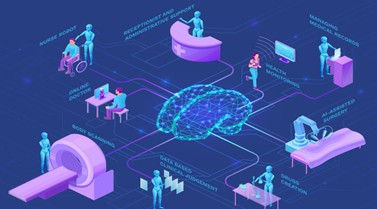
Disease Prediction and Prevention
By analyzing large-scale health data, supercomputers contribute to predictive analytics. They help to identify risk factors for diseases based on genetic, environmental, and lifestyle data. Develop predictive models to foresee disease outbreaks or progression and enable early interventions, minimizing health complications and improving outcomes.
Precision Medicine
Supercomputers enable the realization of precision medicine by integrating data from diverse sources, such as electronic health records, wearable devices, and genomic data. Tailoring treatments to an individual’s unique biological makeup and optimizing therapeutic approaches for maximum efficacy with minimal side effects.
Simulation of Biological Processes
Simulating complex biological systems, such as protein folding and cellular interactions, is essential for understanding diseases. Supercomputers helps the model intricate processes at unprecedented speed and accuracy, provide insights into disease mechanisms and potential treatments and support advancements in immunotherapy and other cutting-edge treatments.
Benefits of Supercomputers in Health Care
Improved Accuracy
Supercomputers enhance the accuracy of diagnoses and treatment plans by analyzing comprehensive datasets. This reduces the likelihood of errors and ensures that patients receive the most appropriate care.

Faster Processing
The speed of supercomputers allows for rapid analysis of complex data, leading to quicker decision-making in clinical settings. This is particularly beneficial in emergency situations where timely interventions are critical.
Cost-Effectiveness
While the initial investment in supercomputers is high, their ability to streamline research and clinical processes can lead to significant cost savings in the long run. By reducing the time and resources needed for drug development and patient care, supercomputers make personalized health care more affordable.
Challenges and Limitations
While supercomputers offer immense potential, their application in personalized health care faces challenges:
Data Privacy and Security
The use of supercomputers in health care raises concerns about data privacy and security. It is crucial to safeguard patient data against breaches and unauthorized access.
Integration with Existing Systems
Integrating supercomputers with existing health care systems can be challenging. It requires significant infrastructure upgrades and training for health care professionals.
Future Prospects
The future of supercomputers in health care is promising, with advancements in technology and collaboration driving progress. Key developments include:

Quantum Computing
Expected to surpass current supercomputers in processing power, enabling even more detailed simulations and analyses. This could lead to breakthroughs in areas such as protein folding and real-time genomic analysis, making treatments more precisely and timely.
AI and Machine Learning Integration
Combining supercomputing with artificial intelligence will enhance data analysis, enabling more accurate predictions and personalized treatments. These technologies can work in tandem to uncover patterns in patient data that were previously undetectable, offering new avenues for preventive care.
Global Collaborations
Shared access to supercomputing resources across countries and institutions will democratize their benefits. This collaborative approach can bridge gaps in health care innovation, ensuring that advancements reach underserved regions and contribute to global health equity.
Conclusion
Supercomputers are revolutionizing personalized health care by enabling rapid data processing, precise simulations, and tailored treatments. Despite challenges, their role in genomic research, drug discovery, and disease prevention highlights their transformative potential. Continued advancements and collaborations will further enhance their impact, paving the way for a future where health care is truly individualized and efficient.
Citations
Sunki, K., Reddy, C. K. K., Reddy, D. M. K., & Doss, S. (2025). The role of quantum artificial intelligence in healthcare advancements. In Cognitive science and technology (pp. 137–158). https://doi.org/10.1007/978-981-97-8533-9_10
Wired, I. (2020, October 30). How Supercomputing can revolutionize healthcare applications? Industry Wired. https://industrywired.com/how-supercomputing-can-revolutionize-healthcare-applications/
Image Citations
Yottaadmin, & Yottaadmin. (2023, January 25). How is the convergence of HPC and AI transforming the healthcare industry? Yotta Infrastructure. https://yotta.com/how-is-the-convergence-of-hpc-and-ai-transforming-the-healthcare-industry/
Latest Global Market Insights. (2024, August 6). What are the 5 takeaways from the quantum computing in healthcare market Overview 2024 - Latest global market insights. Latest Global Market Insights - by the Business Research Company. https://blog.tbrc.info/2024/08/what-are-the-5-takeaways-from-the-quantum-computing-in-healthcare-market-overview/
Särmäkari, J. (n.d.). Health Tuesday: Supercomputers in healthcare. Business Finland. https://www.businessfinland.fi/en/whats-new/events/2024/health-tuesday-supercomputers-in-healthcare-driving-efficiency-and-innovation


Comments